Ceramic Window Tint vs. Dyed Tint: What’s the Difference?
Window tint is one of those vehicle upgrades where two films can look almost identical from the outside while performing very differently in daily use. That is especially important in Richmond and Greater Vancouver, where drivers may want more privacy and glare reduction but also care about cabin comfort, visibility and long-term film performance.
The most significant difference between ceramic window tint and dyed window tint is how the film is constructed and how effectively it manages solar energy, particularly infrared heat.
At Inspire Auto Studio in Richmond, BC, drivers can choose between LLumar ATC Dyed Window Tint, LLumar IRX Ceramic Window Tint, and LLumar AIR 80 Clear Nano Ceramic Window Tint. The right choice depends less on choosing the darkest shade and more on what you want the tint to accomplish.
The LLumar films we install
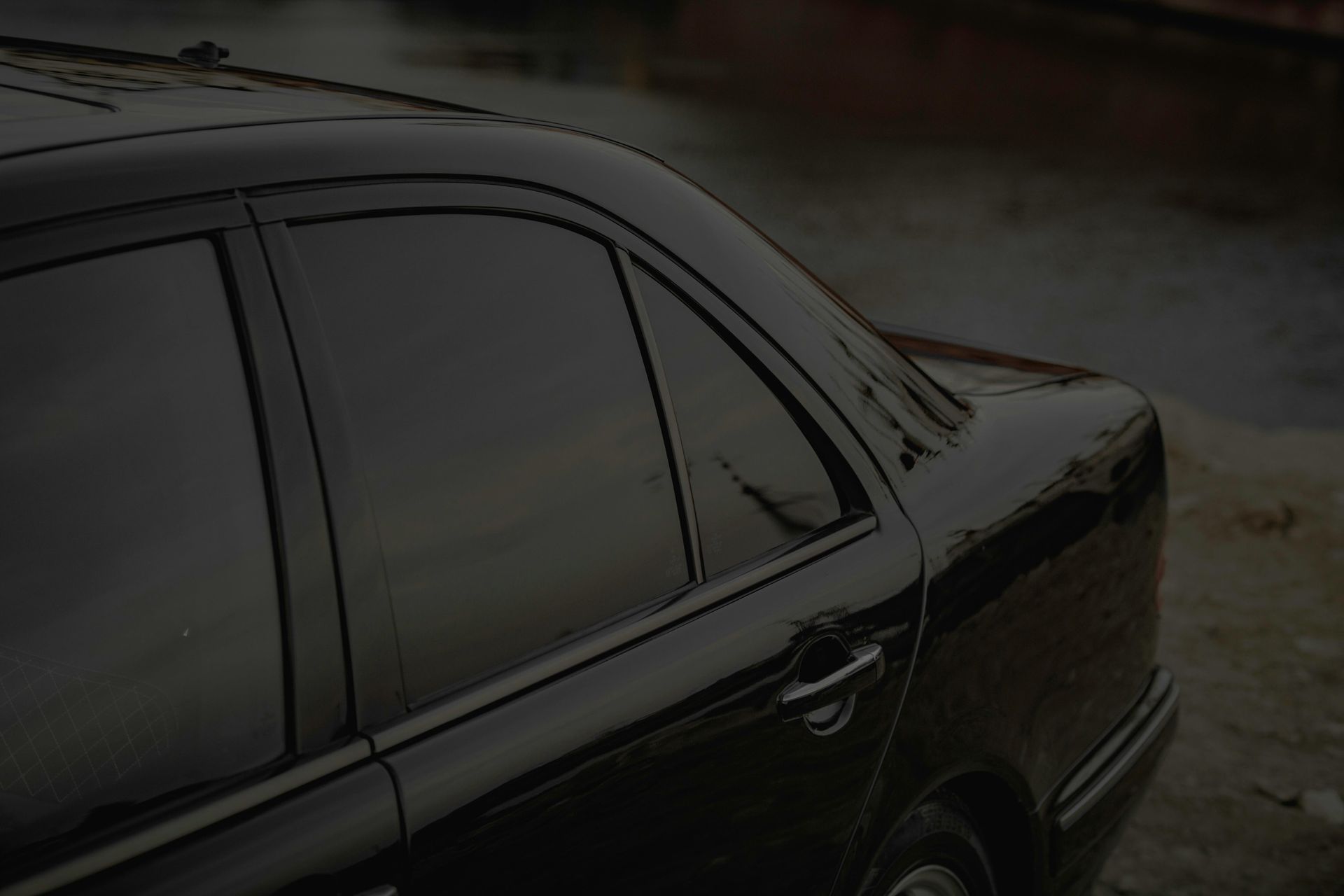
Dyed window film is one of the more established types of automotive window tint. It uses a dye layer to create the film's colour and reduce the amount of visible light passing through the glass.
The result is straightforward: less glare, more privacy and a darker appearance, depending on the film's visible light transmission (VLT).
At Inspire Auto Studio, the LLumar ATC line is the dyed option. The studio lists it as providing up to 30% infrared heat rejection and as an entry-level option for drivers who primarily want the appearance and privacy benefits of tint.
That makes dyed film a reasonable choice when budget and appearance are the main considerations.
But it is important to understand what a darker window tells you about heat rejection.
What Is Ceramic Window Tint?
Ceramic window film uses ceramic technology rather than relying solely on dye to control light and solar energy.
Premium ceramic films are engineered to reject significant amounts of infrared energy while maintaining good optical clarity. That means a ceramic film can provide substantial heat-management benefits without requiring the window to become extremely dark.
Inspire Auto Studio offers LLumar IRX Ceramic Window Tint, which the studio says can reduce infrared heat buildup by up to 70%. It also offers LLumar AIR 80 Clear Nano Ceramic Window Tint, designed for drivers who want significant infrared heat rejection without a visibly dark film. Inspire lists AIR 80 at up to 86% infrared heat rejection.
This distinction is particularly useful for drivers who want a cooler cabin but don't necessarily want very dark glass.
Ceramic vs. Dyed Tint: The Main Differences
| Feature | Dyed Tint | Ceramic Tint |
|---|---|---|
| Main technology | Dye-based film | Nano-ceramic technology |
| Appearance | Dark, consistent appearance | Available from dark to very light/clear |
| Privacy | Yes, depending on VLT | Yes, depending on VLT |
| Glare reduction | Yes | Yes |
| Infrared heat rejection | More limited | Significantly higher on premium films |
| Cabin comfort | Improved | Greater heat-management potential |
| Optical clarity | Good quality varies by film | Typically excellent |
| Price | More affordable | |
| Best for | Appearance, privacy, budget | Heat control, comfort and performance |
The important point is that VLT and heat rejection are different measurements.
A 15% film is darker than a 50% film, but that doesn't automatically mean it rejects more heat. Film construction and published performance specifications matter.
Does Darker Tint Mean Less Heat?
This is one of the biggest misconceptions about automotive window tint.
Visible Light Transmission (VLT) tells you how much visible light passes through the film. A lower VLT percentage means a darker film.
For example:
- 5% VLT: very dark,
- 15% VLT: dark,
- 35% VLT: moderately dark,
- 50% VLT: relatively light,
- 80% VLT: very light/near-clear.
But VLT doesn't tell you how effectively the film rejects infrared energy.
That is why a lighter ceramic film can sometimes provide better heat rejection than a much darker dyed film.
For drivers who spend significant time in direct sunlight, this distinction matters more than simply choosing the darkest shade available.
Which Tint Blocks More UV?
Both quality dyed and ceramic automotive films can provide substantial UV protection.
Inspire Auto Studio's LLumar ATC dyed film and its ceramic options are designed to provide UV protection while also addressing glare and solar exposure. Its AIR 80 product is specifically listed as blocking 99% of UV.
UV protection is important because prolonged ultraviolet exposure can contribute to fading and deterioration of interior materials over time.
But UV protection should not be confused with infrared heat rejection.
UV, visible light and infrared radiation are different parts of the solar spectrum. A film can be excellent at blocking UV without providing the same level of infrared rejection as a premium ceramic film.

Why Ceramic Tint Can Keep a Vehicle More Comfortable
Infrared radiation is a significant component of the solar energy entering a vehicle through its glass.
When a window film is designed to reject more infrared energy, less solar heat reaches the interior.
That can make a noticeable difference when:
- The vehicle sits outside during the day.
- You regularly drive in direct sunlight.
- You have a dark interior.
- Your vehicle has large glass areas.
- You want to reduce the workload on the air-conditioning system.
- You frequently drive long distances.
This is where ceramic tint tends to justify its higher price.
The benefit isn't necessarily that the film looks dramatically different. It's that you can feel the difference in the cabin.
Inspire's IRX ceramic option is specifically positioned around infrared heat reduction, while AIR 80 is intended for drivers who want high heat rejection without a dark appearance.
Does Ceramic Tint Look Better Than Dyed Tint?
That part is subjective.
A quality dyed film can provide a clean, uniform appearance and is often chosen specifically because it delivers a classic tinted look at a lower price.
Ceramic film can also provide an attractive appearance, but its biggest advantage isn't necessarily aesthetics.
The more important consideration is performance at a given level of darkness.
If two films look similarly dark but one provides substantially greater infrared heat rejection, the ceramic film is offering a functional benefit that you cannot determine simply by looking at the vehicle from outside.
Inspire Auto Studio offers tint shades including 5%, 15%, 35%, 50% and 80%, allowing customers to consider appearance and performance together.
Is Ceramic Tint Worth the Extra Cost?
The question is what you expect from the installation.
Dyed tint may make sense if you primarily want:
- A darker appearance,
- Increased privacy,
- Glare reduction,
- Basic solar protection,
- A more affordable installation.
Ceramic tint may make more sense if you prioritize:
- Infrared heat rejection,
- Cabin comfort,
- Long-term performance,
- Strong solar protection without excessive darkness,
- Optical clarity,
- A premium window-film upgrade.
What About a Clear Ceramic Windshield Film?
This is where ceramic technology becomes particularly interesting.
Some drivers assume that windshield protection requires visibly dark glass. That's not necessarily the case.
Inspire offers LLumar AIR 80 Clear Nano Ceramic Window Tint, which is designed to provide infrared heat rejection while maintaining a near-clear appearance. The studio lists it for front-window matching and full-windshield applications and states that it can provide up to 86% infrared heat rejection.
For someone who wants a more comfortable cabin but doesn't want to noticeably darken the windshield, a clear ceramic film can be worth discussing.
However, legal requirements come first.
What Is Legal Window Tint in British Columbia?
This is an important consideration for Richmond and Greater Vancouver drivers.
British Columbia's Motor Vehicle Act Regulations restrict aftermarket material that reduces light transmission on vehicle windows. The e regulations allow such material on the windshield only within the top 75 mm, on side windows behind the driver, and on the rear window when the vehicle has outside rear-view mirrors on both sides.
That means choosing a film based solely on darkness or appearance can create a problem if it is applied to a location where aftermarket tint is not permitted.
We take local regulations into account when helping customers choose tint darkness and reflectivity.
If you're unsure what can legally be installed on your specific vehicle, it's better to ask before selecting the film.

Does Ceramic Tint Interfere With GPS or Cell Signals?
Modern ceramic window films are non-metallic, which is an important distinction from some older metallic film technologies.
This means quality ceramic film can provide heat rejection without creating the same type of signal-interference concerns associated with certain metallic films.
For modern vehicles that rely heavily on GPS, Bluetooth, mobile connectivity, keyless entry, satellite radio and other wireless systems, this can be an important consideration.
The specific film construction still matters, so it is worth confirming the technology of the product being installed rather than assuming every window film performs identically.
How Long Does Ceramic or Dyed Tint Last?
Longevity depends on the quality of the film, installation, vehicle exposure and product specifications.
Poor-quality film and poor installation can result in problems such as bubbling, peeling, colour change or premature deterioration.
Inspire Auto Studio uses LLumar window films, and its tint installations are designed to resist peeling, bubbling and fading.
A warranty doesn't mean every film will look identical forever under every condition. It does, however, provide an important level of protection when choosing a professional installation.
Ceramic vs. Dyed Tint: Which Should You Choose?
There isn't one correct answer for every vehicle owner.
If your priority is affordable privacy and a darker appearance, a quality dyed film such as LLumar ATC can be a sensible option.
If your priority is heat rejection and cabin comfort, ceramic film is usually the more compelling upgrade.
And if you want significant infrared heat rejection without a noticeably dark windshield, a clear ceramic option such as LLumar AIR 80 deserves consideration, subject to applicable BC regulations and the specific glass application.
The most important thing is not to compare tint based on darkness alone.
Instead, compare:
- VLT — how dark the film is.
- Infrared rejection — how effectively it manages infrared energy.
- UV protection — how much UV radiation is blocked.
- Optical clarity — how clearly you can see through the glass.
- Film construction — dyed, ceramic or another technology.
- Installation quality — how precisely the film is applied.
- Warranty and manufacturer support.
- Legal compatibility with the intended window.
Professional Window Tint in Richmond, BC
Window tint is a relatively simple upgrade, but choosing the right film requires more than deciding how dark you want your windows to look.
Dyed tint and ceramic tint serve different priorities. Dyed film can provide an attractive appearance, privacy and glare reduction at a lower price. Ceramic film costs more because it is engineered to deliver substantially stronger infrared heat management and premium performance.
At Inspire Auto Studio, Richmond drivers can choose between LLumar ATC dyed film, LLumar IRX ceramic film and LLumar AIR 80 clear nano-ceramic film. The team can help match the film, shade and coverage to your vehicle, priorities and applicable BC requirements.