PPF vs Ceramic Coating: Which Does Your Car Actually Need?
If you've started researching paint protection, you've probably hit this question fast: PPF or ceramic coating?
Both protect your car. Both are worth the investment. But they do completely different things — and choosing the wrong one (or skipping one when you needed both) is an expensive mistake. Here's an honest breakdown.
What Is Paint Protection Film (PPF)?
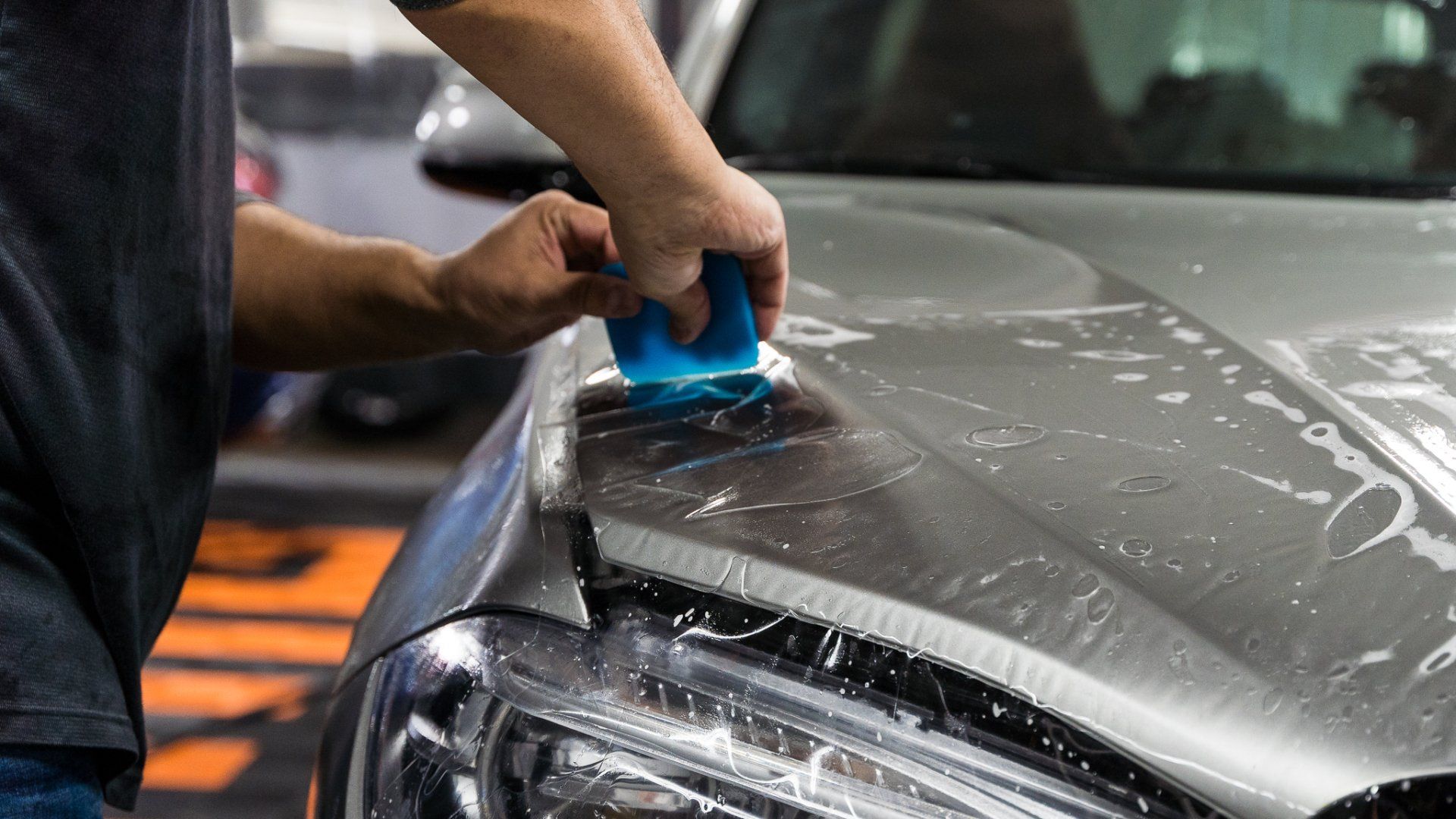
PPF is a clear, physical film — typically 8 to 10 mils thick — that gets applied directly to your paint. Think of it as a sacrificial barrier between your paint and the road.
When a rock chip hits your hood, it goes through the film — not your paint. When a shopping cart clips your door, the film absorbs it. The film is self-healing on most products, meaning light surface scratches and scuffs disappear on their own with heat.
PPF protects against:
- Rock chips and stone strikes
- Road debris at highway speeds
- Bug splatter and bird droppings (which etch paint if left)
- Light abrasion and door dings
- UV damage and yellowing over time
What PPF doesn't do:
- It comes with a hydrophobic top coat, but it typically lasts 6 months to 1 year — ceramic coating over the film extends that protection significantly
- It doesn't provide the same chemical contamination resistance as a dedicated ceramic coating on its own
PPF is physical protection. It's a shield.
What Is Ceramic Coating?
Ceramic coating is a liquid polymer that bonds chemically to your paint and cures into a hard, slick protective layer. It doesn't add physical thickness like PPF. What it does is dramatically change the surface properties of your paint.
A properly applied ceramic coating makes your paint hydrophobic, UV-resistant, and much harder to contaminate. Water beads and sheets off. Dirt, grime, and brake dust don't stick the same way. Bird droppings and industrial fallout are easier to remove before they etch.
Ceramic coating protects against:
- UV oxidation and paint fading
- Environmental contamination (acid rain, tree sap, bird droppings)
- Light surface marring and swirl marks (on higher-tier coatings)
- Water spots and mineral deposits
- Everyday grime and road film
What ceramic coating doesn't do:
- It won't stop a rock chip. A stone at highway speed will still break through ceramic and into your paint.
- It won't stop deep scratches or physical impacts.
Ceramic coating is surface protection. It's a force field.
The Real Difference: Physical vs. Chemical Protection
| PPF | Ceramic Coating | |
|---|---|---|
| Protection type | Physical barrier | Chemical surface bond |
| Stops rock chips | Yes | No |
| Hydrophobic (water beading) | Yes — fades after 6–12 months | Yes — longer lasting |
| UV protection | Yes | Yes |
| Self-healing | Yes (most films) | Yes (Self Heal tier only) |
| Enhances gloss | Minimal | Yes |
| Typical lifespan | 7–10 years | 2–7+ years depending on tier |
So Which One Do You Need?
Choose PPF if:
- You drive on highways regularly and get rock chips
- You have a new or high-value vehicle you want to keep in showroom condition
- You're buying a vehicle you plan to keep long-term
- You've had rock chip damage before and know how frustrating it is
Choose ceramic coating if:
- Your main concern is keeping your car clean and protected from UV and environmental damage
- You want water to bead off and wash days to be faster
- Your paint is in good condition and you want to maintain it, not repair it
- You're not doing a lot of highway driving with chip risk
Do both if:
- You want the highest level of protection available
- You have a luxury, exotic, or collector vehicle
- You live or drive in conditions that expose your car to both physical impact and environmental damage
This is actually our most common recommendation at Inspire Auto Studio: PPF on the high-impact zones, ceramic over the top of everything. The PPF handles the physical hits, the ceramic makes the whole car easier to maintain and adds the hydrophobic layer that keeps it lasting longer.
How We Do It at Inspire Auto Studio
We offer four tiers of PPF coverage using Inspire PPF and STEK:
- PPF Impact — High-impact zones only: partial hood, full front bumper, mirrors, door edges, headlights. Best entry point for daily drivers.
- PPF Front — Full front-end protection: full hood, front bumper, fenders, mirrors, A-pillars, headlights. The most popular starting package.
- PPF Track — Everything in Front, plus full rocker panels, lower doors, partial roof, rear splash guards, and luggage sill. Built for drivers who push their cars harder.
- PPF Full — Complete vehicle coverage. Every painted panel. For clients who want total peace of mind.
Our Ceramic Coating Packages
We use Feynlabs ceramic coatings exclusively:
- Ceramic Protect (Feynlabs Ceramic V3) — 2–3 year protection on all painted panels.
- Ceramic Ultra (Feynlabs Ultra V3) — 5-year protection with best-in-class hydrophobic performance. Covers paint, glass, and exterior plastics.
- Ceramic Self Heal (Feynlabs Self Heal Plus) — 7+ year protection with full self-healing capability. Our flagship.
The combo we recommend most: PPF Front or PPF Track + Ceramic Ultra applied over the full vehicle. You get physical impact protection on the high-risk zones and a full exterior ceramic finish that makes the car look better and stay cleaner longer.
What About Cost?
PPF is generally a higher investment than ceramic alone — the material cost is higher and installation is more labour-intensive. Ceramic coating on its own is the more accessible option.
That said, compare the cost of one repaint on a bumper or hood — typically $800–$1,500+ in the Vancouver area — against the cost of a front PPF package, and the math usually works in PPF's favour for anyone doing regular highway driving.
The right question isn't "can I afford PPF?" It's "can I afford not to have it?" on a vehicle you care about.
Still Not Sure?
The honest answer is: it depends on your vehicle, how you drive, and what you're trying to protect against. That's why we offer free consultations at Inspire Auto Studio. Bring your car in, we'll look at the paint condition, talk through how you use the vehicle, and give you a straight recommendation — no pressure.